
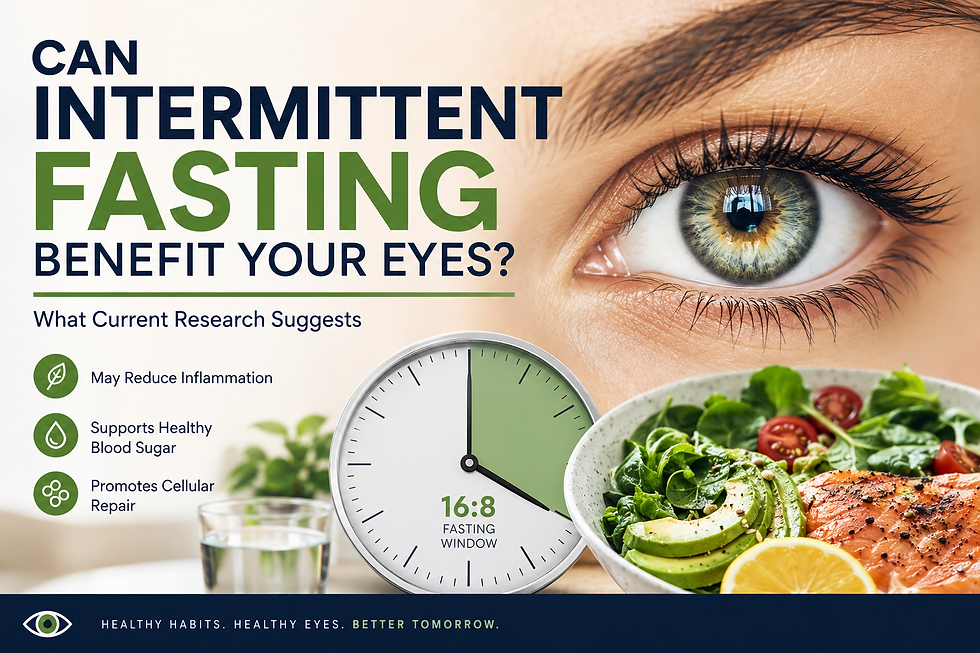
Can Intermittent Fasting Benefit Your Eyes? What Current Research Suggests
By Creative Clicks by Lori
Intermittent fasting has become one of the most talked-about approaches to improving overall health. From weight management and blood sugar control to reducing inflammation, researchers continue exploring its potential benefits. But one question eye care professionals are beginning to ask is:
Can intermittent fasting support healthier eyes and vision?
While research is still developing, early studies suggest that intermittent fasting may positively influence several factors that contribute to long-term eye health. Although fasting is not a treatment for eye disease, maintaining a healthy body often helps support healthy eyes.
What Is Intermittent Fasting?
Intermittent fasting is an eating pattern that alternates between periods of eating and periods of fasting. Unlike traditional diets, it focuses more on when you eat rather than what you eat.
Some of the most common fasting schedules include:
16:8 Method – Fast for 16 hours and eat during an 8-hour window.
14:10 Method – A slightly less restrictive approach.
5:2 Method – Eat normally five days a week while significantly reducing calories on two non-consecutive days.
During fasting periods, most people consume only water, black coffee, or unsweetened tea.
How Might Fasting Affect Eye Health?
Researchers believe intermittent fasting may influence several biological processes that benefit the eyes.
Reduced Inflammation
Chronic inflammation has been linked to numerous eye conditions, including dry eye disease, diabetic eye disease, and age-related macular degeneration.
Some studies suggest intermittent fasting may lower inflammatory markers throughout the body, potentially creating a healthier environment for ocular tissues.
Better Blood Sugar Control
High blood sugar is one of the leading causes of diabetic retinopathy, a condition that damages the tiny blood vessels inside the retina.
Improving insulin sensitivity through healthy lifestyle habits—including intermittent fasting for appropriate individuals—may help reduce long-term risks associated with diabetes.
Cellular Repair
During fasting, the body activates a natural process known as autophagy, which helps remove damaged or aging cells.
Scientists continue studying whether this cellular "housekeeping" process could someday play a role in protecting delicate retinal cells from age-related damage.
Can Fasting Improve Dry Eye?
Dry eye disease is influenced by many factors, including:
Inflammation
Hormonal changes
Diet
Hydration
Environmental exposure
While there is currently no strong evidence that fasting directly cures dry eye, reducing systemic inflammation may indirectly support a healthier tear film in some individuals.
Hydration remains essential, especially during fasting periods.
What About Cataracts, Glaucoma, or Macular Degeneration?
Research is ongoing.
Scientists are investigating whether fasting-related metabolic changes could eventually help protect retinal cells or reduce oxidative stress associated with aging eyes.
At this time:
Fasting has not been proven to reverse cataracts.
It has not been shown to cure glaucoma.
It should not replace regular eye examinations or prescribed treatments.
Instead, intermittent fasting may become one component of an overall healthy lifestyle that supports long-term vision.
Eye Health Starts with Whole-Body Health
Healthy vision depends on much more than wearing glasses or having annual eye exams.
Supporting your overall health can benefit your eyes through:
Eating nutrient-rich foods
Maintaining a healthy weight
Exercising regularly
Managing blood pressure
Controlling blood sugar
Getting quality sleep
Staying hydrated
Not smoking
These habits have far stronger scientific support than any single dietary trend alone.
Is Intermittent Fasting Right for Everyone?
Not necessarily.
Intermittent fasting may not be appropriate for people who:
Have diabetes requiring medication adjustments
Are pregnant or breastfeeding
Have a history of eating disorders
Take medications that require food
Have certain chronic medical conditions
Always speak with your physician before making significant dietary changes.
The Bottom Line
Current research suggests intermittent fasting may offer indirect benefits for eye health by supporting better metabolic health, lowering inflammation, and promoting normal cellular maintenance.
However, more high-quality human studies are needed before fasting can be recommended specifically as an eye health strategy.
The best way to protect your vision remains a combination of healthy lifestyle choices, regular comprehensive eye examinations, and following your eye doctor's recommendations.
Key Takeaways
✔ Intermittent fasting focuses on when you eat rather than what you eat.
✔ Early research suggests fasting may reduce inflammation and improve metabolic health.
✔ Better overall health often supports healthier eyes.
✔ There is currently no evidence that fasting cures eye diseases.
✔ Always consult your healthcare provider before beginning a fasting program.
Disclaimer: This article is intended for educational purposes only and should not be considered medical advice. Always consult your physician or eye care professional before making changes to your diet or healthcare routine.
Comments